Heritage in Motion: The ‘Round in Nine’ & the Birth of Kruger
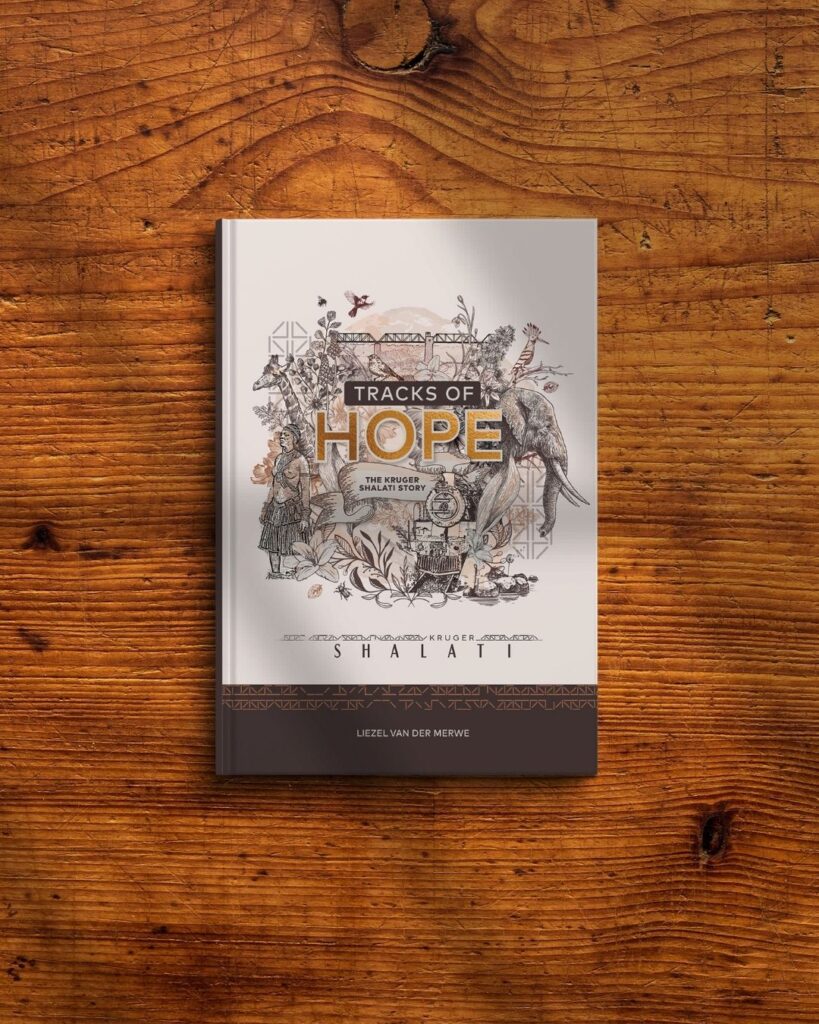
In celebration of Heritage Month, we are sharing an excerpt from our book “Tracks of Hope – The Kruger Shalati Story” by Liezel van der Merwe.
Enjoy!
TOUR TO THE RESCUE
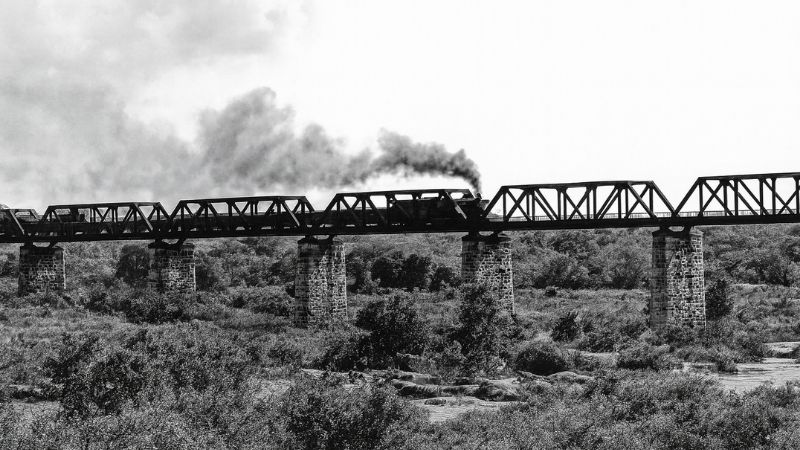
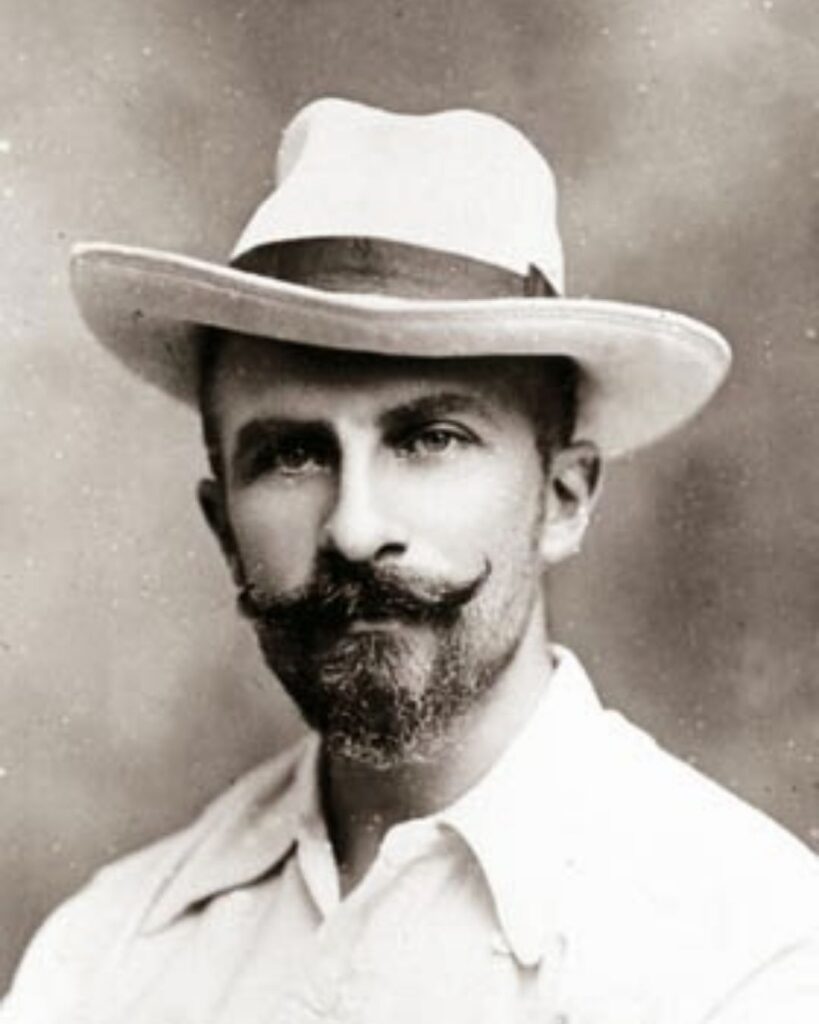
Luckily, a lifeline arrived in 1923 when railway authorities floated the idea of a nine-day roundtrip tourist rail tour from Johannesburg to Lourenço Marques via the Lowveld. It became known as the “Round in Nine” tour, and the first journey took place that same year. In an effort to promote the national park scheme, Colonel Stevenson-Hamilton approached the organising authority and suggested that the train spend a night at Sabie Bridge before proceeding to Newington the following day.
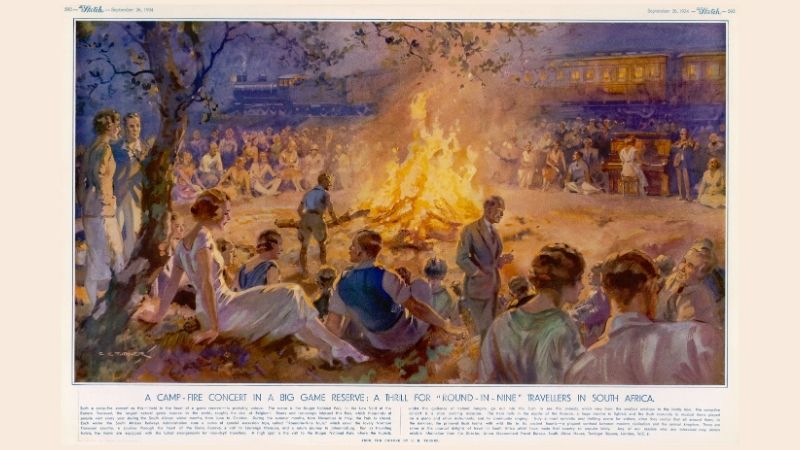
After the first few excursions, this portion of the journey quickly became a highlight of the tour. A game ranger travelled with the train and took the passengers on short walks through the bush. While they would sleep on the train, the evenings were filled with stories around a large campfire and dining experiences at Huhla Station (near Skukuza on the northern bank of the Sabie River). A grand piano was wheeled out to ensure a festive evening under the stars.
To the delight of Colonel Stevenson-Hamilton, the public’s response was overwhelmingly positive. His confidence in the potential success of the national park scheme was strengthened as he observed: “The interest betrayed by the public in the animals and the remarks I overheard when mixing with the guests made me at last confident that, could only our national park scheme mature, it would become popular and therefore an asset to the country. It was beyond measure encouraging to feel that the South African public, despite tradition, might be content to look at animals without wanting to kill them.”
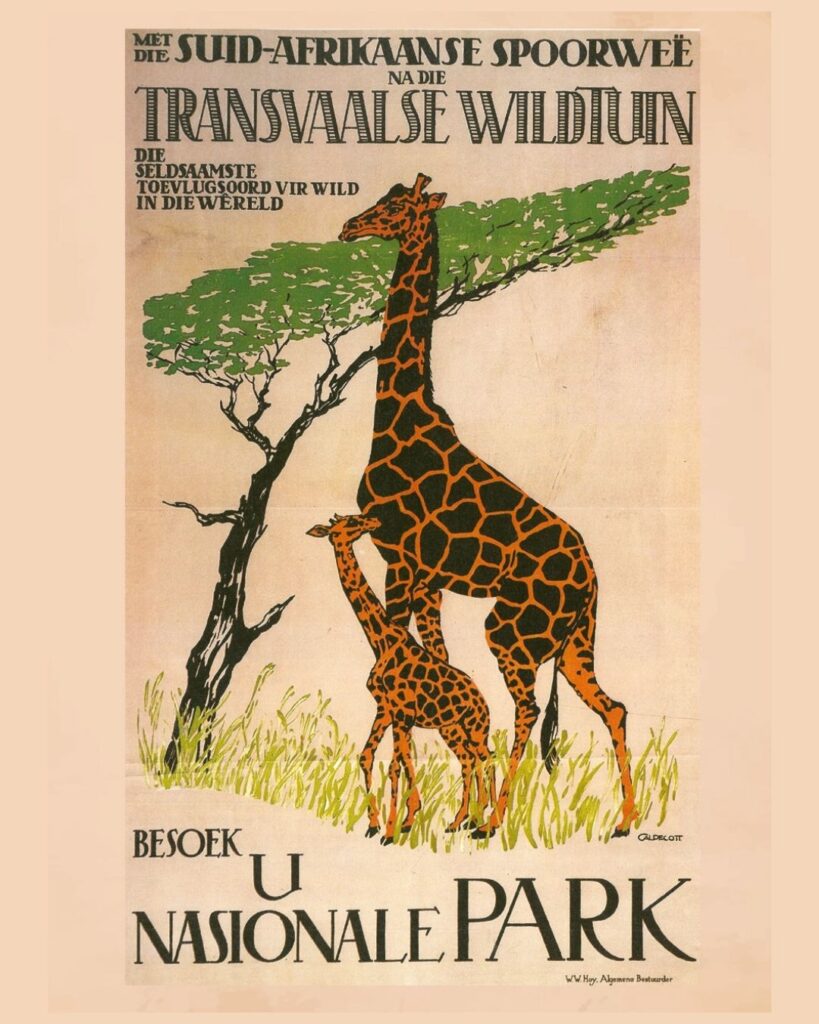
During this era, railway authorities were wholehearted supporters of the national park scheme as they recognised its publicity value. The general manager, Sir William W. Hoy, even appointed Harry Stratford Caldecott, an artist, as the railway publicity agent tasked with promoting the Sabi Game Reserve to the public. Caldecott spent two months with Colonel Stevenson-Hamilton, and although he had no bush experience, his enthusiasm for the scheme resulted in great publicity for the park thanks to his distinctive artwork and numerous newspaper articles. He also created the now-famous giraffe poster, which hung at many railway stations in the country at the time.
The scheme matured, and the Kruger National Park was proclaimed on 31 May 1926. South African National Parks (SANParks) was established as a formal organisation to manage the Park, and Colonel Stevenson-Hamilton became its first warden. His unwavering commitment to safeguarding and managing the area’s wildlife was praiseworthy and a shining example, leaving an enduring influence and creating a conservation legacy that echoes through generations. The local Shangaan people gave Colonel Stevenson-Hamilton the nickname Skukuza, which roughly translates to “he who sweeps clean”, an apt moniker recognising his dedication to nurturing a new culture of conservation.
To purchase your own copy of our beautiful hardcover book, send an email to our Retail Manager, Candice, at retail@krugerstation.com.
“Receiving Two MICHELIN Keys is an incredible honour,” says General Manager Gavin Ferreira. “But what makes it meaningful is that it reflects the passion of our team and the spirit of the place we are privileged to share with our guests.”
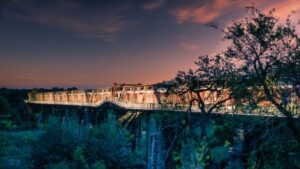
The summer rains have reshaped the landscape of the Kruger, and with them, the way the park is experienced in this moment. From our vantage point on the bridge, we’ve been witnessing a season of resilience, collaboration, and extraordinary wildlife encounters unfold day by day.
Published: 21 January 2026 at 11:00 amFrequently Asked Questions Is Kruger Shalati open despite the recent rainfall? Yes. Kruger Shalati remains open, fully operational, and warmly welcoming guests.While…
We use cookies on our website to give you the most relevant experience by remembering your preferences and repeat visits. By clicking “Accept All”, you consent to the use of ALL the cookies.
This website uses cookies to improve your experience while you navigate through the website. Out of these, the cookies that are categorized as necessary are stored on your browser as they are essential for the working of basic functionalities of the website. We also use third-party cookies that help us analyze and understand how you use this website. These cookies will be stored in your browser only with your consent. You also have the option to opt-out of these cookies. But opting out of some of these cookies may affect your browsing experience.
Necessary cookies are absolutely essential for the website to function properly. These cookies ensure basic functionalities and security features of the website, anonymously.
Cookie
Duration
Description
cookielawinfo-checkbox-analytics
11 months
This cookie is set by GDPR Cookie Consent plugin. The cookie is used to store the user consent for the cookies in the category "Analytics".
cookielawinfo-checkbox-functional
11 months
The cookie is set by GDPR cookie consent to record the user consent for the cookies in the category "Functional".
cookielawinfo-checkbox-necessary
11 months
This cookie is set by GDPR Cookie Consent plugin. The cookies is used to store the user consent for the cookies in the category "Necessary".
cookielawinfo-checkbox-others
11 months
This cookie is set by GDPR Cookie Consent plugin. The cookie is used to store the user consent for the cookies in the category "Other.
cookielawinfo-checkbox-performance
11 months
This cookie is set by GDPR Cookie Consent plugin. The cookie is used to store the user consent for the cookies in the category "Performance".
viewed_cookie_policy
11 months
The cookie is set by the GDPR Cookie Consent plugin and is used to store whether or not user has consented to the use of cookies. It does not store any personal data.
Functional cookies help to perform certain functionalities like sharing the content of the website on social media platforms, collect feedbacks, and other third-party features.
Performance cookies are used to understand and analyze the key performance indexes of the website which helps in delivering a better user experience for the visitors.
Analytical cookies are used to understand how visitors interact with the website. These cookies help provide information on metrics the number of visitors, bounce rate, traffic source, etc.
Advertisement cookies are used to provide visitors with relevant ads and marketing campaigns. These cookies track visitors across websites and collect information to provide customized ads.